The Significance of Sindoor, Mangalsutra, and Chooda in Indian Weddings
ArticlesExplore the cultural and emotional importance of three cherished bridal symbols in Indian weddings. Discover how these traditional adornments represent love, commitment, marital identity, and cherished customs, offering brides and families a deeper appreciation of their timeless place in wedding celebrations.
Three Timeless Bridal Symbols and Their Meaning in Indian Weddings
Indian weddings are rich with traditions that carry meaning far beyond their beauty. From the colours chosen for the bridal trousseau to the rituals performed by families, each detail reflects love, blessings, identity, and the beginning of a new chapter. Among these customs, certain bridal adornments hold a particularly cherished place. They are worn close to the heart and become lasting reminders of the promises made during the wedding ceremony.
Sindoor, the mangalsutra, and bridal bangles such as chooda are three such symbols. Their designs and ways of wearing them may differ across regions, communities, and families, yet their emotional importance remains deeply connected to marriage. For many brides, these adornments represent the bond shared with their spouse, the blessings of loved ones, and the heritage passed down through generations.
Understanding their significance adds depth to the wedding experience. It allows a bride and her family to view these traditional details not merely as accessories, but as meaningful parts of the celebration.
Sindoor: A Sacred Mark of Married Identity
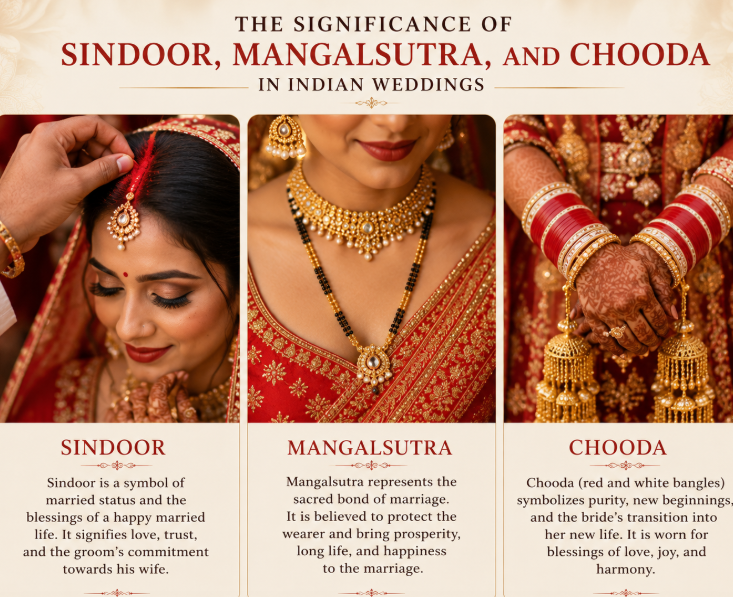
Sindoor is one of the most recognisable bridal symbols in Indian weddings. Traditionally applied in the parting of a married woman’s hair, it is associated with marital status, commitment, and the blessings received during the wedding ceremony. The ritual of applying sindoor is often an emotional moment, as it marks the formal beginning of a couple’s married life.
For many families, the sight of a bride wearing sindoor evokes memories of mothers, grandmothers, and other married women who followed the same custom. It creates a strong connection between the bride’s present and her family’s history. Though a simple adornment, it often carries the weight of generations of tradition.
The first application of sindoor during the wedding ceremony is especially significant. It is commonly performed as part of the wedding rituals, making the moment intimate and memorable for the couple and their families. The bride may feel a powerful sense of transition as she embraces her new identity as a married woman. The emotion lies not only in the ritual itself, but also in the promises and companionship it represents.
Sindoor can also be styled in ways that suit a bride’s personal look. Some brides prefer a subtle line along the hair parting, while others choose a more pronounced style for traditional ceremonies. The way it is worn may vary according to family customs, regional practices, and the bride’s comfort. What remains constant is its connection with love, marital commitment, and cultural identity.
For a modern bride, wearing sindoor can be both a personal choice and a respectful expression of heritage. Some may wear it regularly, while others reserve it for particular occasions, festivals, or family ceremonies. There is no single way to experience its meaning. Its importance comes from the emotional value the bride and her family attach to it.
Mangalsutra: A Symbol of Love and Commitment
The mangalsutra is another deeply meaningful bridal adornment. Traditionally worn around the neck, it is associated with the marital bond and the promises made between a couple. The wedding ceremony in which the groom ties the mangalsutra around the bride’s neck is often one of the most moving moments of the celebration.
The word itself is connected with auspiciousness and marriage. For the bride, receiving the mangalsutra can feel like a visible reminder of the relationship she is beginning to build with her spouse. It represents companionship, responsibility, and the emotional commitment shared within a marriage.
The mangalsutra is also significant because it is worn close to the heart. This closeness adds to its emotional symbolism. It becomes a daily reminder of the wedding vows, the family blessings, and the promises exchanged during the ceremony. Over time, it may become one of the most personal pieces in a bride’s jewellery collection.
Styles differ widely across Indian communities. Some mangalsutras feature a traditional arrangement of black beads, while others include gold elements or a distinctive pendant chosen according to family customs. The length, design, and detailing may vary, allowing the bride to select a style that reflects both tradition and her personal taste.
Contemporary brides often look for mangalsutras that can be worn comfortably with different outfits. A traditional design may be selected for wedding rituals, while a refined or lighter version may be preferred for everyday wear. This balance allows the bride to honour the custom while adapting it to her lifestyle.
The process of choosing a mangalsutra can also be deeply personal for the couple and their families. It may involve conversations about design, cultural expectations, comfort, and long term wearability. More than a jewellery purchase, it becomes part of the couple’s shared story. The selected piece may be treasured for years and eventually remembered as one of the most important gifts of the wedding.
For many brides, the mangalsutra symbolises the continuity of love after the wedding day. While bridal jewellery is often planned around the ceremony, the mangalsutra extends beyond the celebrations. It becomes a lasting part of married life and a cherished representation of the bond created at the wedding altar or mandap.
Chooda and Bridal Bangles: Blessings for a New Beginning
Bangles have always held a special place in Indian bridal traditions. They are associated with beauty, celebration, femininity, and auspicious beginnings. In several North Indian wedding customs, the bride wears chooda, a traditional set of bridal bangles that is often presented by her maternal family. In other communities, brides wear different combinations of glass, gold, ivory toned, lacquer, or embellished bangles.
Chooda is especially connected with the bride’s transition into married life. The ceremony of wearing it can be an emotional family occasion, filled with blessings and affection. The bride’s maternal relatives often play an important role in this tradition, making the adornment a symbol of the bond between the bride and the family she has grown up with.
The colours of bridal bangles often carry a festive and auspicious feeling. Their vibrant appearance complements the bridal outfit and adds movement to the bride’s overall look. The gentle sound of bangles can also become part of the sensory memory of the wedding, reminding the bride of the joyful days surrounding her marriage.
Beyond their visual appeal, bangles represent the support and good wishes given to the bride as she begins a new phase of life. They are linked with happiness, prosperity, and the hope that the bride’s married journey will be filled with love and harmony. Their presence on the bride’s wrists can therefore feel like a constant expression of family blessings.
The style of chooda and bangles may be influenced by regional customs and individual preference. Some brides choose a traditional, elaborate set, while others prefer a more understated arrangement that can be paired with modern outfits. Bangles may also be coordinated with the bridal lehenga, saree, or other jewellery, creating a harmonious wedding look without losing their cultural meaning.
For wedding planners and families, it is helpful to discuss these customs early. The bride’s bangle ceremony, the timing of wearing chooda, and the preferred colours or materials may be important to different family members. Thoughtful planning ensures that the tradition is included in a way that feels comfortable, respectful, and emotionally complete for everyone involved.
Preserving Tradition While Honouring Personal Choice
The meaning of bridal symbols is not limited to a single interpretation. Indian weddings bring together diverse customs, and practices can vary significantly between regions and families. A symbol that is central to one community may be observed differently in another. Brides and families should therefore approach these traditions with respect for their own cultural background and personal beliefs.
A bride may choose to wear all three symbols in a traditional manner, adapt their styling, or select designs that suit her lifestyle. What matters most is the intention behind the choice. The emotional importance of these adornments is strengthened when the bride feels connected to what she is wearing.
It is also worth considering comfort and quality. Bridal jewellery and adornments may be worn during long ceremonies, family gatherings, and festive occasions. Selecting comfortable designs and planning how each piece will be styled can help the bride enjoy her celebrations with ease. Traditional details do not have to feel separate from a modern bridal wardrobe. With thoughtful choices, they can become an elegant part of the bride’s individual expression.
Families can make these moments even more meaningful by sharing the stories behind the customs. A mother explaining the significance of her wedding bangles, a grandmother recalling her own sindoor ceremony, or a family member describing the history of a mangalsutra can transform an adornment into a treasured memory. Such conversations allow the bride to understand not only what she is wearing, but also why it matters.
The Emotional Legacy of Bridal Symbols
Sindoor, the mangalsutra, and chooda are more than traditional bridal accessories. They represent different aspects of married life. Sindoor reflects marital identity and the sacred beginning of a new chapter. The mangalsutra expresses love, commitment, and the bond between two partners. Chooda and bridal bangles carry the blessings of family, joy, and hope for the bride’s future.
Together, these symbols connect the wedding ceremony with everyday life. They preserve memories of the vows, rituals, and people who made the celebration meaningful. Even as bridal fashion evolves, their emotional place remains strong because they are rooted in love and family tradition.
For today’s bride, these adornments can be worn with pride, personal meaning, and a sense of connection to her heritage. Whether styled traditionally or interpreted in a contemporary way, they continue to make the bridal journey feel more intimate and significant. Their beauty is not only in their colour, craftsmanship, or design, but in the stories and promises they carry into married life.