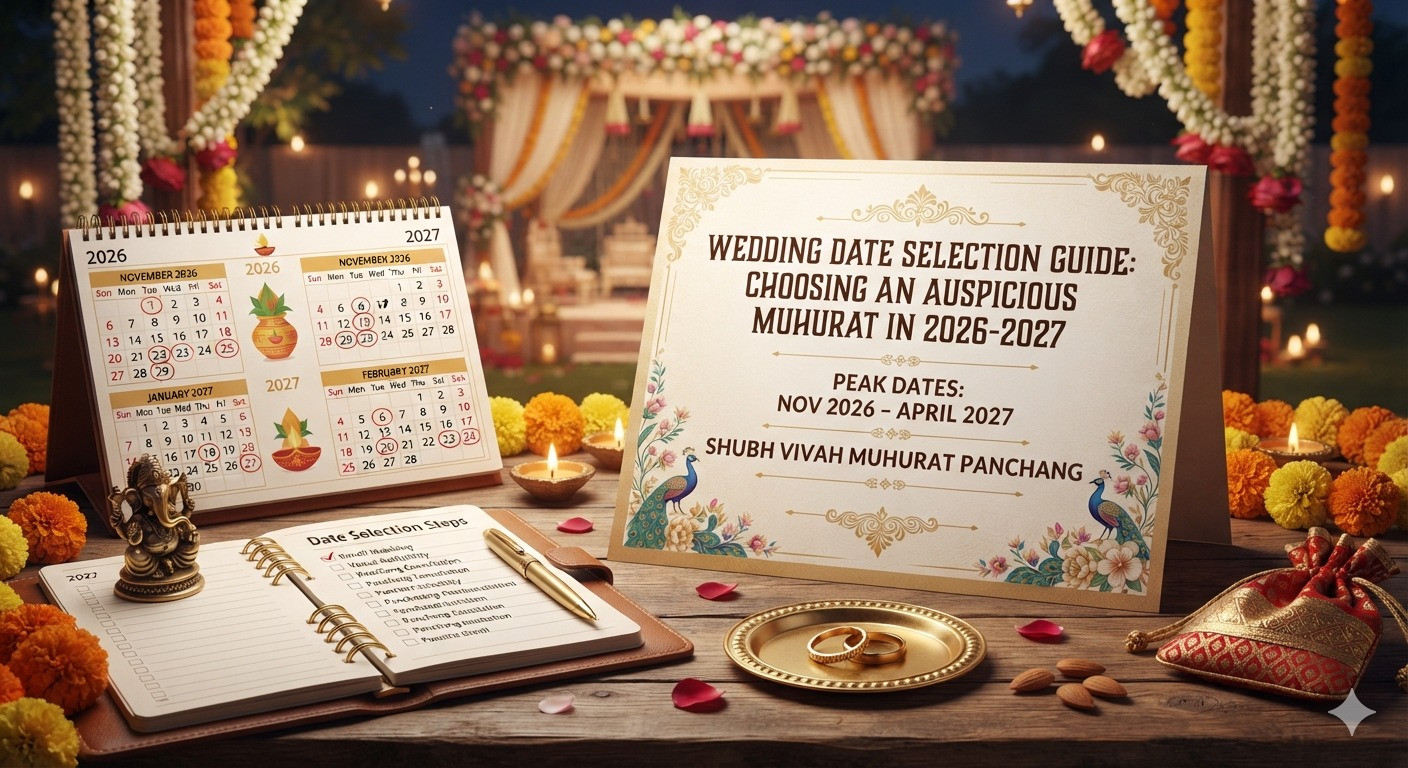
Wedding Date Selection Guide: Choosing an Auspicious Muhurat in 2026 27
ArticlesDiscover how to choose an auspicious wedding muhurat for 2026–27 with thoughtful guidance for your special celebration. This helpful guide makes date selection simpler for couples and families planning a meaningful Indian wedding filled with tradition, joy, and beautiful beginnings.
Choosing an auspicious wedding muhurat is one of the most meaningful steps in planning an Indian wedding. A muhurat is not simply a date and time on the calendar. It represents a carefully selected moment for beginning married life with the blessings of tradition, family, and positive intentions.
For couples planning their wedding in 2026 or 2027, selecting the right muhurat can feel both exciting and overwhelming. There may be several dates to consider, family customs to respect, and practical arrangements to coordinate. With thoughtful guidance and an organised approach, the process can become simpler and more enjoyable for everyone involved.
An auspicious wedding muhurat brings together cultural beliefs and the hopes a couple has for their new beginning. Whether your wedding is an intimate family celebration or a grand occasion, the right date can help make the festivities feel even more special.
Understanding the Meaning of a Wedding Muhurat
In Indian wedding traditions, a muhurat refers to an auspicious time chosen for an important ceremony. The wedding muhurat is selected with the belief that beginning the marriage at a favourable time can invite harmony, happiness, and prosperity into the couple’s life together.
The selection is generally guided by traditional astrological considerations and the couple’s birth details. A knowledgeable priest or family astrologer may study the birth charts of the bride and groom before suggesting suitable dates and timings. The final recommendation may include not only the wedding date but also the ideal time for the main wedding rituals.
A muhurat can therefore vary from one couple to another. A date that is considered suitable for one wedding may not necessarily be the preferred choice for another. This is why personalised guidance is important when families are planning their wedding calendar for 2026 or 2027.
Begin Planning Well in Advance
Wedding dates that are considered auspicious are often in high demand. Many families plan their weddings around the same periods, which can make venues, accommodation, caterers, decorators, photographers, and other services difficult to book at short notice.
Starting the muhurat selection process early gives couples more freedom to compare suitable options. It also allows families to discuss preferences without feeling rushed. Once a few possible dates are identified, practical arrangements can be considered before making the final decision.
Early planning is especially helpful for couples inviting guests from different cities or countries. Travel arrangements, leave from work, accommodation, and family availability may all influence the final choice. A date that is spiritually meaningful and convenient for important guests can create a smoother celebration.
Consult a Trusted Priest or Astrologer
A trusted priest or astrologer can offer valuable guidance during the muhurat selection process. They may consider the birth details of both partners, traditional calendars, and the requirements of the wedding rituals before recommending suitable dates and timings.
It is helpful for the couple and their families to share accurate birth information and explain any important preferences at the beginning. If there are several family traditions to be followed, these can also be discussed in advance. Clear communication helps avoid confusion later in the planning process.
Families may receive more than one suitable option. In such cases, the couple can compare the suggested dates based on their personal priorities and practical availability. The role of the expert is to guide the family, while the final decision can be made with mutual understanding and respect.
Consider Traditional Calendars and Regional Customs
Indian weddings are shaped by diverse regional and family traditions. The periods considered suitable for marriage may differ according to the calendar followed by a family or community. Customs may also influence the preferred ceremonies, wedding timings, and the way the date is announced.
When planning a wedding in 2026 or 2027, couples should confirm which traditional calendar their family follows. This can help ensure that the chosen date aligns with the practices that are important to both sides.
Regional customs may also affect how the wedding schedule is arranged. Some families may place greater importance on the time of the main ceremony, while others may focus on a specific sequence of pre wedding and wedding rituals. Understanding these preferences early allows the entire celebration to be planned with greater harmony.
Balance Tradition with Practical Details
An auspicious muhurat is an important part of the wedding, but practical considerations also deserve careful attention. The ideal date should work for the couple, their immediate families, and the key arrangements connected with the celebration.
Venue availability is one of the first details to confirm. A suitable muhurat may fall on a date when the preferred venue is already booked. In such situations, families can discuss other recommended options instead of making a decision under pressure.
Weather and travel may also influence the comfort of the guests. Couples planning outdoor functions should consider the setting and the overall wedding schedule. Those hosting guests from different locations may wish to select a date that allows sufficient travel time.
The availability of close family members is equally important. A wedding is a shared celebration, and the presence of parents, grandparents, siblings, and other loved ones often carries deep emotional value. A date that allows the most important people to attend can make the occasion even more memorable.
Coordinate the Wedding Schedule
The wedding muhurat usually refers to the most auspicious time for the central wedding rituals, but the celebration may include several events before and after it. Engagement ceremonies, haldi, mehendi, sangeet, family gatherings, and receptions may all need to be scheduled around the main ceremony.
Once the muhurat is confirmed, create a complete wedding timeline. This makes it easier to understand how the different functions will fit together. The couple can then coordinate invitations, venue bookings, guest travel, beauty appointments, outfits, and vendor arrangements with greater confidence.
It is important to distinguish between the date of the wedding and the exact time of the main rituals. If the ceremony has a specific muhurat, the event should be planned so that the couple, family members, priest, and required arrangements are ready well before that time.
Keep Both Families Involved
Wedding date selection often brings together two families with their own traditions, expectations, and emotional priorities. Including both sides in the discussion can help create a sense of togetherness from the beginning.
The couple can first understand the important preferences of each family and then speak openly about their own needs. If there are differences in opinion, focusing on the shared purpose of the wedding can make the conversation more positive.
No single date may satisfy every preference perfectly. The aim is to choose a muhurat that feels meaningful, respectful, and workable for the people most closely involved. A calm and considerate discussion can prevent unnecessary stress during the early stages of planning.
Avoid Making the Decision in a Hurry
The excitement of getting married can sometimes encourage couples to confirm a date too quickly. However, it is worth taking time to verify the suggested muhurat, understand the ceremony timings, and check practical availability before making an announcement.
Families should also ensure that everyone is referring to the same date and time, particularly when wedding planning involves people in different cities. Confirming the details clearly can help prevent misunderstandings with venues, guests, and wedding professionals.
Once the date is finalised, it can be shared with immediate family and key wedding partners. Formal invitations and other arrangements can then follow according to the wedding planning timeline.
Let the Muhurat Support Your Celebration
A wedding muhurat is ultimately about beginning a new chapter with faith, hope, and positive intent. While traditional guidance helps select a meaningful time, the joy of the wedding comes from the love and togetherness shared by the couple and their families.
For weddings in 2026 and 2027, couples can make the process easier by beginning early, consulting a trusted expert, respecting family customs, and considering practical details alongside tradition. The most suitable date is one that brings together spiritual significance, family participation, and a comfortable celebration plan.
With thoughtful preparation, choosing an auspicious wedding muhurat can become a beautiful part of the journey to marriage. It allows couples and families to look forward to the wedding with clarity, confidence, and the happiness of a truly meaningful beginning.